
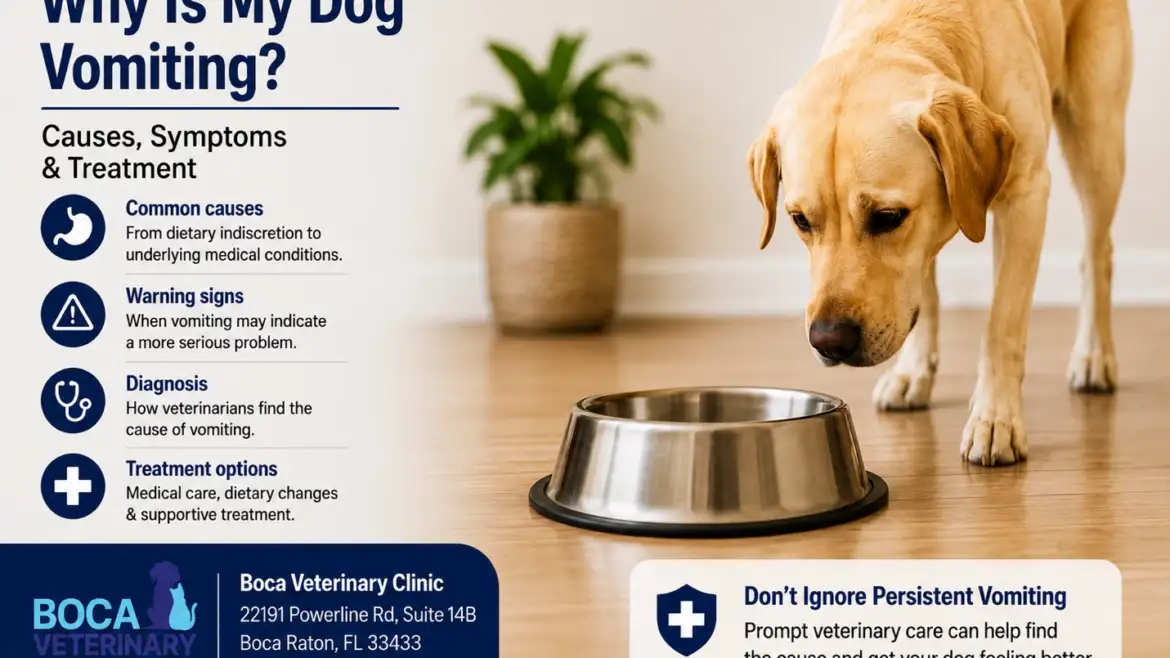
Seeing your dog vomit can be alarming, but not every episode of vomiting is an emergency. A dog that vomits once and then acts completely normal may not require emergency treatment. Repeated vomiting, blood in the vomit, abdominal swelling, severe pain, weakness, suspected poisoning or an inability to keep water down can require prompt veterinary attention.
The safest decision depends on your dog’s symptoms, age, medical history and overall behavior.
If you’re concerned about your dog or aren’t sure how serious the vomiting is, call your veterinarian.
Boca Veterinary Clinic
22191 Powerline Rd, Suites 14A–B
Boca Raton, FL 33433
Phone: 561-392-6540
Key Takeaways
- One isolated episode of vomiting in an otherwise normal adult dog isn’t always an emergency.
- Repeated or persistent vomiting should be discussed with a veterinarian.
- Blood in the vomit warrants veterinary attention.
- Vomiting combined with a swollen or painful abdomen can indicate a serious emergency.
- A dog that repeatedly vomits and cannot keep water down can become dehydrated.
- Vomiting after possible toxin exposure requires prompt veterinary guidance.
- Puppies, senior dogs and dogs with existing medical conditions may need veterinary attention sooner.
- Vomiting accompanied by weakness, collapse, difficulty breathing or severe pain requires immediate attention.
- Don’t give human medications or induce vomiting unless specifically instructed by a veterinarian.
When Should I Take My Dog to the Vet for Vomiting?
Contact a veterinarian when vomiting is repeated, persistent or accompanied by other concerning symptoms.
Seek prompt veterinary attention if your dog is:
- Vomiting repeatedly
- Unable to keep water down
- Vomiting blood
- Extremely weak or lethargic
- Collapsing
- Experiencing significant abdominal pain
- Developing a swollen or hard abdomen
- Repeatedly trying to vomit without producing anything
- Having severe diarrhea along with vomiting
- Showing signs of dehydration
- Having difficulty breathing
- Suspected of eating something toxic
- Suspected of swallowing a foreign object
Your dog’s age and medical history also matter.
A young puppy, senior dog or dog with an existing medical condition may be more vulnerable to complications and should often be evaluated sooner.
When Is Dog Vomiting an Emergency?
Vomiting becomes particularly concerning when it occurs along with signs suggesting a potentially serious underlying problem.
Vomiting With a Swollen Abdomen
Vomiting or repeated attempts to vomit combined with a suddenly enlarged or painful abdomen should be treated as an emergency.
One potential cause is gastric dilatation-volvulus (GDV), commonly called bloat.
GDV occurs when the stomach becomes enlarged and may rotate. It can progress rapidly and requires immediate veterinary treatment.
Warning signs can include:
- A swollen or tight abdomen
- Repeated unsuccessful attempts to vomit
- Restlessness
- Drooling
- Abdominal pain
- Weakness
- Collapse
Do not wait for these symptoms to improve on their own.
Vomiting Blood
Blood in vomit can appear bright red or may sometimes look dark or similar to coffee grounds.
Blood can have many potential causes, including irritation, gastrointestinal disease, foreign objects, toxins and other medical problems.
Contact Boca Veterinary Clinic promptly if you see blood in your dog’s vomit.
Vomiting With Weakness or Collapse
A dog that is vomiting and also becomes extremely weak, disoriented, unresponsive or collapses requires immediate veterinary attention.
These symptoms can indicate a serious systemic problem and shouldn’t be monitored at home.
Vomiting After Suspected Poisoning
If you know or suspect your dog ate something potentially toxic, don’t wait for vomiting or other symptoms to become severe before seeking professional guidance.
Potential hazards include:
- Human medications
- Chocolate
- Xylitol-containing products
- Rodenticides
- Antifreeze
- Household chemicals
- Certain plants
- Some human foods
- Lawn and garden products
Save the package, label or a photo of the suspected substance when possible.
Do not induce vomiting unless a veterinarian or animal poison professional specifically instructs you to do so.
How Many Times Can a Dog Vomit Before Going to the Vet?
There isn’t a universal number that determines whether vomiting is dangerous.
The pattern of vomiting and your dog’s overall condition matter more than simply counting episodes.
A dog that vomits once but is otherwise bright, alert, eating, drinking and behaving normally is different from a dog that vomits three times in a short period and becomes lethargic.
Contact your veterinarian if vomiting:
- Happens repeatedly over a short period
- Continues throughout the day
- Returns frequently
- Prevents your dog from keeping water down
- Is accompanied by diarrhea
- Is accompanied by behavioral changes
- Occurs with abdominal discomfort
- Is associated with loss of appetite
When in doubt, call your veterinarian and describe exactly what’s happening.
My Dog Vomited Once but Is Acting Normal. Should I Worry?
A single episode of vomiting in an otherwise healthy adult dog isn’t always an emergency.
If your dog immediately returns to normal behavior and has no other concerning symptoms, your veterinarian may recommend monitoring.
However, continue watching for:
- Additional vomiting
- Diarrhea
- Loss of appetite
- Lethargy
- Abdominal discomfort
- Excessive thirst
- Inability to keep water down
- Changes in behavior
If vomiting happens again or your dog’s condition changes, contact your veterinarian.
Why Is My Dog Vomiting?
Vomiting is a symptom rather than a specific disease.
There are many possible causes, ranging from relatively minor digestive upset to serious medical conditions.
Potential causes can include:
- Eating something unusual
- Dietary changes
- Food intolerance
- Gastrointestinal inflammation
- Parasites
- Foreign-body obstruction
- Pancreatic disease
- Liver disease
- Kidney disease
- Toxin exposure
- Medication reactions
- Endocrine disorders
- Infections
- Other systemic illnesses
Because so many different conditions can cause vomiting, repeated or unexplained vomiting may require diagnostic testing.
What Does the Color of Dog Vomit Mean?
Pet owners often try to determine what’s wrong based on the color of the vomit.
Color can provide clues, but vomit color alone generally cannot diagnose the cause.
Yellow Vomit
Yellow fluid is often bile.
Dogs may sometimes vomit bile when the stomach is relatively empty, but repeated yellow vomiting can also occur with gastrointestinal and other medical problems.
If yellow vomiting continues or your dog has other symptoms, contact your veterinarian.
White Foam
White or clear foam may consist of saliva, stomach fluid or a mixture of gastrointestinal contents.
An isolated episode doesn’t necessarily indicate a serious problem.
Repeated foamy vomiting, however, should be evaluated—particularly when accompanied by abdominal swelling, unsuccessful retching, weakness or other concerning symptoms.
Clear Liquid
Clear vomit can occur when a dog has been drinking water or has little food in the stomach.
If your dog repeatedly vomits after drinking and cannot keep water down, contact a veterinarian.
Brown Vomit
Brown vomit can occur for several reasons, including partially digested food.
Because color alone cannot reliably determine the cause, repeated brown vomiting or vomiting associated with other symptoms should be discussed with your veterinarian.
Red or Bloody Vomit
Bright red material may indicate fresh blood.
Dark material resembling coffee grounds can represent partially digested blood.
Either finding warrants veterinary attention.
Why Is My Dog Vomiting Yellow Bile?
Yellow vomit commonly contains bile, a digestive fluid.
Occasional bile vomiting can occur when a dog’s stomach is empty, but repeated yellow vomiting shouldn’t automatically be dismissed as hunger.
Other gastrointestinal or systemic medical problems can also cause bile vomiting.
Contact your veterinarian if your dog repeatedly vomits yellow fluid or develops symptoms such as:
- Loss of appetite
- Diarrhea
- Abdominal pain
- Lethargy
- Weight loss
- Increased thirst
- Behavioral changes
Why Is My Dog Vomiting but Acting Normal?
Some dogs appear completely normal after vomiting once.
A single episode may result from something relatively minor, but normal behavior doesn’t guarantee there isn’t an underlying problem.
Monitor your dog closely.
If vomiting becomes repeated, your dog stops eating, develops diarrhea, becomes lethargic or shows other symptoms, contact your veterinarian.
Why Is My Dog Vomiting After Drinking Water?
Dogs sometimes drink rapidly after exercise or when very thirsty and may bring water back up.
However, repeated vomiting immediately after drinking or inability to keep water down warrants veterinary attention.
Dogs that cannot retain fluids can become dehydrated, and persistent vomiting can indicate an underlying medical problem.
Vomiting vs. Regurgitation: What’s the Difference?
Vomiting and regurgitation aren’t the same thing.
Vomiting generally involves active abdominal contractions and may be preceded by nausea, drooling or retching.
Regurgitation is usually more passive. Food or fluid may come back up without significant abdominal effort.
This distinction can help your veterinarian narrow down possible causes.
If possible, take a short video of the episode. Showing your veterinarian exactly what happened can sometimes help determine whether your dog is vomiting, regurgitating, coughing or gagging.
What Will a Veterinarian Check When a Dog Is Vomiting?
Your veterinarian will typically begin by asking about your dog’s medical history and performing a physical examination.
Important information includes:
- When vomiting started
- How often your dog has vomited
- What the vomit looks like ( feel free to bring a picture with you)
- Whether your dog is eating
- Whether your dog can drink normally
- Whether diarrhea is present
- Recent dietary changes
- Possible toxin exposure
- Possible access to toys, bones or other foreign objects
- Current medications
- Existing medical conditions
Depending on the findings, additional diagnostic testing may be recommended.
What Tests Might My Dog Need for Vomiting?
Testing depends on the severity and suspected cause.
Diagnostic options can include:
Blood Testing
Bloodwork can provide information about hydration, infection, anemia, organ function and other potential abnormalities.
Boca Veterinary Clinic has in-house laboratory capabilities that can be useful when evaluating sick pets.
Digital X-Rays
X-rays can help veterinarians evaluate the abdomen and may identify certain foreign objects, abnormal gas patterns and other abnormalities.
Abdominal Ultrasound
Ultrasound provides detailed images of many abdominal organs and structures.
It may be useful when evaluating the:
- Stomach
- Intestines
- Liver
- Gallbladder
- Kidneys
- Bladder
- Spleen
- Pancreas
- Adrenal glands
Boca Veterinary Clinic offers same-day ultrasound capabilities.
Endoscopy
In certain situations, endoscopy may allow veterinarians to examine portions of the gastrointestinal tract using a camera.
It can sometimes also be used to obtain samples or address certain foreign objects without traditional open surgery.
Additional Testing
Depending on your dog’s condition, your veterinarian may recommend additional laboratory or diagnostic testing.
Can an Ultrasound Help Determine Why My Dog Is Vomiting?
Yes. Abdominal ultrasound can be an important diagnostic tool for dogs with persistent or unexplained vomiting.
Ultrasound allows veterinarians to evaluate the structure of many abdominal organs and may help identify abnormalities involving the stomach, intestines, pancreas, liver, kidneys and other structures.
Not every vomiting dog needs an ultrasound.
Your veterinarian will determine whether ultrasound is appropriate based on the physical examination, medical history and results of other diagnostic tests.
Can a Dog Need Surgery for Vomiting?
Vomiting can occasionally be caused by a gastrointestinal obstruction or another condition requiring surgical treatment.
Dogs can swallow objects such as:
- Toys
- Socks
- Fabric
- Bones
- Corn cobs
- Rocks
- Other foreign materials
A foreign object can become lodged in the stomach or intestines.
Signs can include repeated vomiting, loss of appetite, abdominal pain, lethargy and difficulty keeping food or water down.
Suspected intestinal obstruction requires prompt veterinary evaluation.
Should I Give My Dog Medicine for Vomiting?
Do not give your dog human medications unless your veterinarian specifically tells you to do so.
Some medications that are safe for people can be dangerous for dogs, and medication can sometimes mask symptoms or complicate diagnosis.
Treatment depends on what’s causing the vomiting.
Contact your veterinarian before giving medication.
Should I Feed My Dog After Vomiting?
The appropriate feeding plan depends on your dog’s age, medical history, symptoms and suspected cause of vomiting.
Because recommendations vary, particularly for puppies, senior dogs and dogs with medical conditions, contact your veterinarian if you’re uncertain.
Don’t force food or large amounts of water into a dog that is actively vomiting.
When Does a Puppy Vomiting Need a Vet?
Puppies can become dehydrated and ill more quickly than healthy adult dogs.
Contact your Boca Veterinary Clinic veterinarian promptly if a puppy has repeated vomiting, diarrhea, weakness, loss of appetite, inability to keep water down or other concerning symptoms.
Young puppies may also be more vulnerable to infectious diseases and complications from dehydration.
When Does a Senior Dog Vomiting Need a Vet?
Senior dogs may have underlying medical conditions that make repeated vomiting more concerning.
Vomiting in an older dog can sometimes be associated with gastrointestinal disease or conditions involving organs such as the kidneys, liver or pancreas.
Contact your veterinarian if an older dog develops repeated or unexplained vomiting, particularly when accompanied by changes in appetite, thirst, weight, activity or behavior.
Dog Vomiting Care in Boca Raton
Boca Veterinary Clinic provides veterinary evaluation for dogs experiencing vomiting and other gastrointestinal symptoms at our Boca Veterinary Clinic animal hospital.
Depending on your dog’s condition, our diagnostic capabilities include:
- Physical examination
- In-house laboratory testing
- Digital X-rays
- Abdominal ultrasound
- Endoscopy
- Internal medicine
- Veterinary surgery
- Hospitalization
We provide routine, urgent and emergency veterinary care during operating hours and are open seven days a week.
Boca Veterinary Clinic also serves pet owners from Parkland, Coconut Creek, Deerfield Beach and Delray Beach.
Boca Veterinary Clinic
22191 Powerline Rd, Suites 14A–B
Boca Raton, FL 33433
Call 561-392-6540 if you’re concerned about your dog’s vomiting or other symptoms.
Frequently Asked Questions About Dog Vomiting
When should I worry about my dog vomiting?
Repeated vomiting, blood, severe lethargy, collapse, abdominal pain or swelling, inability to keep water down, suspected poisoning or vomiting associated with other significant symptoms warrants prompt veterinary attention.
How many times should a dog vomit before going to the vet?
There isn’t a specific number that applies to every dog. Repeated vomiting over a short period or vomiting accompanied by other concerning symptoms should be discussed with a veterinarian.
Should I take my dog to the vet after vomiting once?
An otherwise healthy adult dog that vomits once and immediately returns to normal may not require emergency treatment. Monitor closely and contact your veterinarian if vomiting happens again or other symptoms develop.
Why is my dog throwing up yellow liquid?
Yellow vomit often contains bile. While this can sometimes happen when the stomach is empty, repeated yellow vomiting can also occur with gastrointestinal or other medical problems and should be discussed with a veterinarian.
Why is my dog vomiting white foam?
White foam may contain saliva and stomach fluid. An isolated episode may not be serious, but repeated foamy vomiting—especially with abdominal swelling, unsuccessful retching, weakness or pain—requires veterinary attention.
What if my dog is vomiting but acting normal?
Monitor your dog closely. If vomiting becomes repeated or your dog develops loss of appetite, diarrhea, lethargy, pain or other symptoms, contact your veterinarian.
Is it an emergency if my dog can’t keep water down?
Repeatedly vomiting water or being unable to keep fluids down warrants veterinary attention because dehydration can develop and an underlying medical problem may be present.
Can a foreign object make my dog vomit?
Yes. Objects lodged in the stomach or intestines can cause vomiting and may lead to a potentially serious gastrointestinal obstruction. Repeated vomiting, abdominal pain and loss of appetite warrant prompt veterinary evaluation.
Can an ultrasound determine why my dog is vomiting?
An abdominal ultrasound can help veterinarians evaluate the stomach, intestines and other abdominal organs. Whether an ultrasound is appropriate depends on your dog’s symptoms, physical examination and other diagnostic findings.
Where can I take my vomiting dog to a veterinarian in Boca Raton?
Boca Veterinary Clinic evaluates dogs with vomiting and gastrointestinal symptoms at 22191 Powerline Rd, Suites 14A–B, Boca Raton, FL 33433. The clinic offers in-house laboratory testing, digital X-rays, ultrasound and other diagnostic capabilities. Call 561-392-6540.
Further reading
Emergency preparation resource: AVMA pet first aid and emergency transport guide. First aid does not replace veterinary care.

