Dog Dental Cleaning: Signs Your Dog Needs Professional Dental Care
Bad breath may seem normal for dogs, but persistent bad breath can be one of the first signs of dental disease. Plaque and tartar can accumulate around the teeth and gums, potentially leading to inflammation, infection, discomfort and periodontal disease.
Your dog may need professional dental care if you notice persistent bad breath, visible tartar, red or bleeding gums, difficulty chewing, dropping food, loose or damaged teeth, facial swelling or changes in eating habits. A veterinary dental examination can determine whether your dog needs a professional dental cleaning or additional treatment.
Boca Veterinary Clinic provides dog dental examinations, professional dental cleanings, dental radiographs and oral surgical procedures at our Boca Raton animal hospital.
Boca Veterinary Clinic
22191 Powerline Rd, Suites 14A–B
Boca Raton, FL 33433
Phone: 561-392-6540
Key Takeaways
- Persistent bad breath can be a sign of dental disease.
- Plaque can harden into tartar that can’t simply be brushed away at home.
- Dental disease can exist below the gumline where pet owners cannot see it.
- Dogs often continue eating despite dental discomfort.
- Red gums, bleeding, loose teeth and difficulty chewing warrant veterinary attention.
- Dental X-rays can identify problems below the gumline.
- Professional veterinary dental cleaning allows the teeth to be cleaned above and below the gumline.
- Some diseased or damaged teeth may require extraction.
- Home dental care can help slow plaque accumulation but doesn’t replace veterinary treatment when dental disease is already present.
- Regular veterinary examinations can help identify dental problems earlier.
How Do I Know If My Dog Needs a Dental Cleaning?
The best way to determine whether your dog needs a professional dental cleaning is through a veterinary oral examination.
Signs that may indicate dental disease include:
- Persistent bad breath
- Yellow or brown tartar
- Red or swollen gums
- Bleeding gums
- Loose teeth
- Broken teeth
- Difficulty chewing
- Dropping food
- Chewing on only one side
- Pawing at the mouth
- Excessive drooling
- Facial swelling
- Reduced interest in hard food
- Changes in eating behavior
Some dogs show few obvious symptoms despite having significant dental disease.
That’s why your veterinarian should examine your dog’s mouth as part of routine wellness care.
Is Bad Breath Normal for Dogs?
A mild odor after eating isn’t necessarily concerning, but persistent or particularly foul breath shouldn’t automatically be considered normal.
Bad breath can occur when bacteria accumulate around the teeth and gums.
Dental disease is a common cause, although other medical conditions can sometimes affect breath as well.
If your dog’s breath has become noticeably worse, schedule a veterinary examination rather than simply trying to cover the odor with dental treats.
What Is Periodontal Disease in Dogs?
Periodontal disease affects the tissues supporting the teeth.
It begins when plaque containing bacteria accumulates on the teeth.
Plaque can mineralize into tartar, and inflammation can develop around the gums.
As periodontal disease progresses, structures below the gumline can become affected.
Potential consequences include:
- Gum inflammation
- Gum recession
- Periodontal pockets
- Bone loss
- Loose teeth
- Tooth loss
- Pain
- Infection
Much of the important disease process can occur below the gumline, where it isn’t visible simply by looking inside your dog’s mouth.
What Happens During a Professional Dog Dental Cleaning?
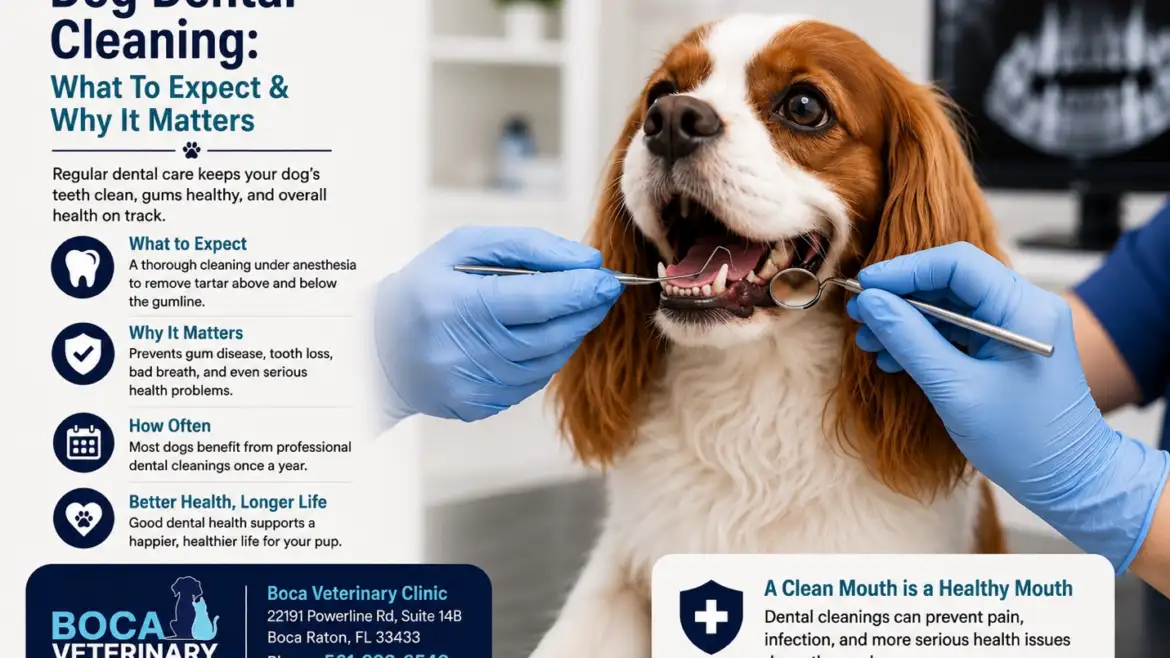
A comprehensive veterinary dental procedure involves more than removing visible tartar.
Depending on your dog’s needs, the process may include:
- Pre-Dental Evaluation
Your veterinarian evaluates your dog’s overall health and oral condition.
Pre-anesthetic laboratory testing may be recommended.
- Anesthesia
A comprehensive dental cleaning generally requires anesthesia so the veterinary team can safely and thoroughly evaluate and clean the mouth, including below the gumline.
- Oral Examination
Each tooth and the surrounding gum tissue can be evaluated for signs of disease.
- Dental Scaling
Plaque and tartar are removed from tooth surfaces and from beneath the gumline.
- Polishing
The teeth are polished after scaling.
- Dental X-Rays When Indicated
Dental radiographs allow veterinarians to evaluate structures that cannot be seen during a visual examination.
- Treatment of Diseased Teeth
Damaged or severely diseased teeth may require additional treatment, including extraction when appropriate.
Your veterinarian can explain the recommended treatment based on your dog’s individual dental findings.
Why Do Dogs Need Anesthesia for Dental Cleaning?
A proper veterinary dental procedure requires examination and cleaning above and below the gumline.
Dogs cannot voluntarily remain completely still while instruments are used around the gums and teeth.
Anesthesia allows the veterinary team to:
- Thoroughly examine the mouth
- Clean beneath the gumline
- Obtain dental X-rays when needed
- Protect the airway
- Perform necessary oral procedures
- Minimize stress and movement
Before anesthesia, your veterinarian evaluates your dog’s health and determines an appropriate anesthetic plan.
Are Anesthesia-Free Dog Dental Cleanings the Same?
No.
Removing visible tartar from the exposed surface of a tooth isn’t the same as performing a comprehensive veterinary dental procedure.
Periodontal disease frequently exists beneath the gumline.
A cosmetic cleaning may make the visible tooth surface look cleaner without addressing disease in areas that matter most.
If you’re concerned about anesthesia, discuss those concerns with your veterinarian rather than substituting a cosmetic cleaning for a medically indicated dental procedure.
What Are Dental X-Rays for Dogs?
Dental radiographs provide images of structures below the gumline.
A large portion of each tooth is located beneath the visible surface, so some dental problems can’t be identified simply by looking inside the mouth.
Dental X-rays can help veterinarians evaluate:
- Tooth roots
- Surrounding bone
- Certain fractures
- Bone loss
- Retained roots
- Other abnormalities beneath the gumline
Radiographs can therefore be an important part of comprehensive veterinary dental care.
Why Would My Dog Need a Tooth Extracted?
A veterinarian may recommend extraction when a tooth is severely diseased, damaged or causing pain.
Potential reasons can include:
- Advanced periodontal disease
- Severe bone loss
- Tooth fracture
- Significant infection
- Loose teeth
- Certain root abnormalities
- Other painful dental conditions
The goal is to eliminate disease and discomfort rather than preserve a tooth that is no longer healthy.
Can Dogs Eat Normally After a Tooth Extraction?
Many dogs adapt remarkably well after diseased teeth are removed.
Your veterinarian will provide specific post-operative feeding and medication instructions.
Depending on the procedure, your dog may temporarily need:
- Softer food
- Activity restrictions
- Pain medication
- Other prescribed medications
- A follow-up examination
Follow the discharge instructions provided for your individual pet.
My Dog Is Still Eating. Could Their Teeth Still Hurt?
Yes. Dogs can continue eating even when they have dental disease or oral discomfort.
Animals don’t always demonstrate pain in ways people expect.
Subtle signs can include:
- Eating more slowly
- Dropping food
- Preferring softer food
- Chewing on one side
- Reduced interest in chew toys
- Pawing at the mouth
- Becoming reluctant to have the face touched
Continued eating shouldn’t be used as proof that your dog’s mouth is healthy.
What Does Dog Dental Disease Look Like?
Visible signs may include:
- Yellow or brown tartar
- Red gums
- Swollen gums
- Bleeding
- Gum recession
- Loose teeth
- Broken teeth
- Discolored teeth
- Facial swelling
However, appearances can be misleading.
A tooth can look relatively normal above the gumline while disease exists around the root.
A veterinary examination and dental radiographs can provide much more information than visual inspection alone.
Why Are My Dog’s Gums Red?
Red gums can indicate inflammation.
Dental plaque and periodontal disease are common causes, although other oral and medical problems can also affect the gums.
Contact your veterinarian if you notice persistent redness, swelling, bleeding or pain.
Why Is My Dog Dropping Food?
Dropping food while eating can be associated with oral discomfort.
Possible dental causes include:
- Loose teeth
- Broken teeth
- Periodontal disease
- Oral inflammation
- Other painful conditions
However, dropping food can also have non-dental causes.
A veterinary examination can help determine what’s happening.
Is a Broken Dog Tooth an Emergency?
A broken tooth warrants veterinary attention because fractures can expose sensitive internal structures and cause pain or infection.
How urgently your dog needs treatment depends on the type of fracture, pain level, bleeding and other factors.
Contact your veterinarian promptly if you notice a broken tooth.
Significant oral trauma, uncontrolled bleeding or severe facial injury may require more urgent care.
How Often Should Dogs Get Their Teeth Professionally Cleaned?
There isn’t one schedule that applies to every dog.
The appropriate frequency depends on factors such as:
- Age
- Breed
- Genetics
- Tooth alignment
- Previous dental disease
- Home dental care
- Diet
- Overall health
Some dogs accumulate plaque and tartar more rapidly than others.
Your veterinarian can recommend a dental-care schedule based on your dog’s individual needs.
Do Small Dogs Need Dental Cleanings More Often?
Small and toy-breed dogs can be particularly prone to dental problems because of factors such as tooth crowding and individual anatomy.
However, dogs of all sizes and breeds can develop periodontal disease.
Regular oral examinations are important regardless of breed.
When Should Puppies Start Dental Care?
Good dental habits can begin while a dog is young.
Getting a puppy accustomed to having their mouth and teeth handled can make home dental care easier later.
Your veterinarian can provide guidance on:
- Tooth brushing
- Appropriate dental products
- Retained baby teeth
- Tooth development
- Oral examinations
Professional cleaning isn’t automatically required simply because a dog reaches a particular age.
Dental treatment should be based on the individual dog’s oral health.
How Can I Keep My Dog’s Teeth Clean at Home?
Home dental care can help reduce plaque accumulation between veterinary visits.
Brush Your Dog’s Teeth
Regular brushing with a pet-specific toothpaste is one of the most useful home-care methods.
Do not use human toothpaste unless a veterinarian specifically says the ingredients are safe for your pet.
Introduce Brushing Gradually
Start slowly and positively.
Allow your dog to become comfortable with having the lips and mouth handled before attempting a full brushing session.
Use Appropriate Dental Products
Your veterinarian may recommend dental chews, diets or other oral-health products.
Products accepted by the Veterinary Oral Health Council (VOHC) can be useful when selecting evidence-supported dental products.
Schedule Regular Veterinary Examinations
Home care doesn’t replace professional evaluation.
Your veterinarian can identify tartar, gingivitis, damaged teeth and other problems that require medical treatment.
Can Dental Treats Replace Brushing?
Dental treats may be useful as part of an oral-health program, but they aren’t necessarily a complete substitute for brushing.
Their effectiveness also varies considerably by product.
A combination of appropriate home care and regular veterinary examinations generally provides a better strategy than relying exclusively on treats.
Can I Scrape Tartar Off My Dog’s Teeth at Home?
You shouldn’t attempt to perform dental scaling on your dog yourself.
Dental instruments can injure:
- Gums
- Tooth enamel
- Oral tissues
More importantly, removing visible tartar doesn’t address disease beneath the gumline.
If significant tartar has accumulated, schedule a veterinary dental evaluation.
Can Dental Disease Affect My Dog’s Overall Health?
Dental disease isn’t merely a cosmetic problem.
Advanced periodontal disease can cause chronic inflammation, infection, pain and tooth loss.
Maintaining oral health is therefore an important component of your dog’s overall veterinary care.
Does My Senior Dog Need Dental Care?
Yes.
Senior dogs can develop substantial dental disease, and oral discomfort may affect their willingness or ability to eat normally.
Age alone doesn’t determine whether a dog can undergo a dental procedure.
Your veterinarian evaluates factors such as:
- Overall health
- Physical examination findings
- Existing medical conditions
- Laboratory results
- Medications
- Expected benefit of dental treatment
An individualized assessment helps determine the safest and most appropriate approach.
What Should I Expect Before My Dog’s Dental Procedure?
Your veterinary team will provide specific instructions.
These may include information about:
- Food and water
- Medications
- Arrival time
- Pre-anesthetic testing
- Expected procedures
- Possible extractions
Follow the instructions from your veterinary team rather than changing medications or fasting your dog without guidance.
What Should I Expect After a Dog Dental Cleaning?
Recovery depends on what procedures were performed.
A dog that receives a routine cleaning may have different aftercare needs than a dog undergoing several extractions.
Your veterinary team may provide instructions regarding:
- Feeding
- Medications
- Activity
- Oral care
- Follow-up appointments
Contact your veterinarian if you’re concerned about your dog’s recovery.
Dog Dental Cleaning in Boca Raton
Boca Veterinary Clinic provides comprehensive dog dental care in Boca Raton, including evaluation and treatment of dental and oral-health problems.
Our veterinary dental services include:
- Oral examinations
- Professional dental cleanings
- Dental radiographs
- Evaluation of periodontal disease
- Treatment of diseased teeth
- Dental extractions and oral surgery when appropriate
Because we’re a full-service animal hospital, our team also has access to in-house laboratory testing and other diagnostic capabilities when evaluating your dog’s overall health before a procedure.
Boca Veterinary Clinic is open seven days a week and serves pet owners throughout Boca Raton, Parkland, Coconut Creek, Deerfield Beach and Delray Beach.
Boca Veterinary Clinic
22191 Powerline Rd, Suites 14A–B
Boca Raton, FL 33433
Call 561-392-6540 to schedule a dental examination for your dog.
Frequently Asked Questions About Dog Dental Cleaning
How do I know if my dog needs a dental cleaning?
Persistent bad breath, visible tartar, red or bleeding gums, difficulty chewing, dropping food, loose teeth or changes in eating habits can indicate dental disease. A veterinary oral examination can determine whether professional cleaning is recommended.
Is bad breath normal for dogs?
Persistent foul breath shouldn’t automatically be considered normal. Dental plaque and periodontal disease are common causes of bad breath and warrant veterinary evaluation.
Why does a dog need anesthesia for dental cleaning?
Anesthesia allows the veterinary team to safely examine and clean the teeth above and below the gumline, obtain dental X-rays and perform necessary oral procedures while protecting the airway.
Are anesthesia-free dog teeth cleanings effective?
Removing visible tartar from an awake dog’s teeth isn’t equivalent to a comprehensive veterinary dental procedure because periodontal disease frequently occurs beneath the gumline.
How often should dogs have their teeth professionally cleaned?
There isn’t one schedule for every dog. Frequency depends on breed, age, genetics, home care and existing dental disease. Your veterinarian can recommend an appropriate schedule.
Can I brush tartar off my dog’s teeth?
Brushing is excellent for controlling plaque, but hardened tartar generally can’t simply be brushed away. Significant tartar warrants a veterinary dental evaluation.
Why does my dog need dental X-rays?
Dental X-rays allow veterinarians to evaluate tooth roots, surrounding bone and other structures beneath the gumline that aren’t visible during a routine oral examination.
Can my dog have dental disease even if they’re still eating?
Yes. Dogs frequently continue eating despite dental discomfort. Changes may be subtle, such as slower eating, dropping food or chewing on one side.
Does my dog need a tooth extraction?
Extraction may be recommended for severely diseased, loose, fractured or painful teeth. Your veterinarian determines treatment based on examination and diagnostic findings.
Can senior dogs have professional dental cleanings?
Age alone doesn’t determine whether dental treatment is appropriate. Your veterinarian evaluates your senior dog’s overall health, medical conditions and diagnostic results before recommending an anesthetic and dental plan.
How can I keep my dog’s teeth clean between dental visits?
Regular brushing with pet-specific toothpaste and veterinarian-recommended dental products can help reduce plaque accumulation. Regular veterinary oral examinations remain important.
Where can I get my dog’s teeth cleaned in Boca Raton?
Boca Veterinary Clinic provides dog dental examinations, professional cleanings, dental radiographs and oral surgical care at 22191 Powerline Rd, Suites 14A–B, Boca Raton, FL 33433. Call 561-392-6540 to schedule an appointment.