
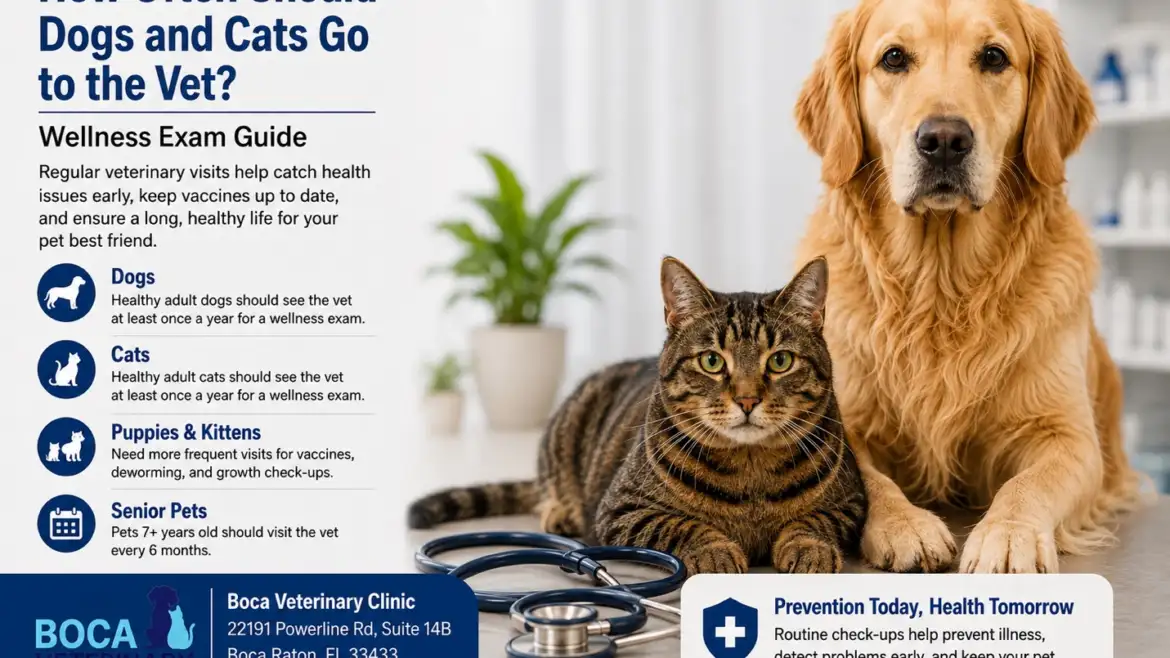
Even when your dog or cat seems perfectly healthy, regular veterinary examinations are an important part of preventive healthcare. Pets can’t tell us when something feels different, and some health problems may develop before obvious symptoms appear.
Most healthy adult dogs and cats should have a veterinary wellness examination at least once a year. Puppies, kittens, senior pets and animals with chronic medical conditions may need more frequent visits. Your veterinarian can recommend an examination schedule based on your pet’s age, breed, lifestyle and medical history.
Boca Veterinary Clinic provides comprehensive wellness and preventive veterinary care in Boca Raton for dogs and cats throughout every stage of life.
Boca Veterinary Clinic
22191 Powerline Rd, Suites 14A–B
Boca Raton, FL 33433
Phone: 561-392-6540
Key Takeaways
- Most healthy adult dogs and cats should generally receive a wellness examination at least once a year.
- Puppies and kittens need more frequent visits during their first months of life.
- Senior pets may benefit from examinations every six months or as recommended by their veterinarian.
- Pets with chronic medical conditions often require more frequent monitoring.
- Indoor cats still need regular veterinary examinations.
- A wellness exam includes much more than vaccinations.
- Bloodwork, urinalysis and other screening tests may be recommended based on age and health.
- Preventive veterinary visits can identify subtle changes before pet owners notice obvious symptoms.
- Your pet’s ideal veterinary schedule should be individualized rather than based solely on age.
How Often Should a Dog Go to the Vet?
Most healthy adult dogs should have a comprehensive veterinary examination at least once every year.
However, some dogs need more frequent veterinary care.
Your veterinarian may recommend visits more often based on factors such as:
- Age
- Breed
- Existing medical conditions
- Medications
- Lifestyle
- Previous health problems
- Weight
- Vaccination needs
- Parasite risk
Puppies, senior dogs and dogs being treated for chronic medical conditions often require more frequent examinations than healthy adult dogs.
How Often Should a Cat Go to the Vet?
Healthy adult cats should generally receive a veterinary wellness examination at least once a year, even if they live entirely indoors.
Cats are particularly good at hiding signs of illness.
Subtle changes in:
- Weight
- Appetite
- Water consumption
- Urination
- Grooming
- Activity
- Behavior
can sometimes provide the first indication of a developing health problem.
Regular veterinary examinations allow these changes to be identified and evaluated.
Do Indoor Cats Really Need Annual Vet Visits?
Yes.
Living indoors can reduce exposure to some risks, but it doesn’t prevent medical conditions such as:
- Dental disease
- Obesity
- Kidney disease
- Diabetes
- Thyroid disease
- Arthritis
- Urinary problems
- Heart disease
- Other age-related conditions
Indoor cats also benefit from regular weight monitoring, dental evaluation and discussions about nutrition and preventive care.
Being indoors doesn’t eliminate the need for veterinary care.
How Often Should a Puppy Go to the Vet?
Puppies need veterinary visits more frequently than healthy adult dogs.
During the first months of life, veterinary appointments help monitor growth and development while establishing an appropriate preventive-care program.
Puppy visits may include:
- Physical examinations
- Vaccinations
- Parasite testing
- Parasite prevention
- Nutrition discussions
- Weight monitoring
- Behavioral guidance
- Microchipping
- Spay or neuter discussions
Vaccinations are typically given as a series during puppyhood rather than through one appointment.
Your veterinarian will recommend a schedule based on your puppy’s age and vaccination history.
How Often Should a Kitten Go to the Vet?
Like puppies, kittens generally need several veterinary visits during their first months of life.
Kitten appointments may include:
- Comprehensive examinations
- Vaccinations
- Parasite testing
- Parasite prevention
- Nutrition guidance
- Growth monitoring
- Microchipping
- Spay or neuter discussions
Your veterinarian can establish a schedule based on your kitten’s age, health and previous veterinary care.
How Often Should a Senior Dog Go to the Vet?
Many senior dogs benefit from veterinary examinations approximately every six months, although the ideal schedule depends on the individual dog.
Dogs age more rapidly than humans, and health changes can occur between annual visits.
More frequent senior wellness examinations may help monitor:
- Weight
- Mobility
- Dental health
- Heart and lungs
- Kidney function
- Liver function
- Endocrine health
- Changes in appetite
- Changes in thirst
- Behavioral changes
Your veterinarian may also recommend periodic laboratory testing. Each pet will be given a tailored treatment plan to follow up which would include frequency of visits.
How Often Should a Senior Cat Go to the Vet?
Senior cats may also benefit from veterinary examinations approximately every six months or according to an individualized schedule.
Cats can develop age-related conditions without obvious early symptoms.
Changes worth monitoring include:
- Weight loss
- Increased thirst
- Increased urination
- Reduced appetite
- Increased appetite
- Vomiting
- Changes in grooming
- Reduced mobility
- Changes in litter-box habits
- Behavioral changes
Regular veterinary visits provide opportunities to detect and investigate these changes.
At What Age Is a Dog Considered a Senior?
There isn’t one exact age at which every dog becomes a senior.
A dog’s aging process is influenced significantly by breed and size.
Large and giant breeds generally reach their senior years earlier than many smaller breeds.
Rather than relying on a single age, your veterinarian can consider your dog’s:
- Breed
- Size
- Medical history
- Physical condition
- Lifestyle
to determine when senior-focused preventive care should begin.
At What Age Is a Cat Considered a Senior?
Cats generally enter their senior years later than many large-breed dogs, but age classifications are only guidelines.
Individual health matters more than the label.
As cats age, veterinarians may recommend changes in:
- Examination frequency
- Laboratory screening
- Weight monitoring
- Dental care
- Nutritional recommendations
- Other preventive measures
What Happens During a Pet Wellness Exam?
A wellness examination is a comprehensive assessment of your pet’s current health.
Your veterinarian may evaluate:
Weight & Body Condition
Changes in weight can sometimes be an early sign of a medical or nutritional problem.
Your veterinarian may evaluate both body weight and body condition.
Eyes
The eyes can be checked for changes involving appearance, clarity and surrounding tissues.
Ears
Your veterinarian may examine the ears for inflammation, discharge or other abnormalities.
Mouth & Teeth
Dental disease is common in dogs and cats.
Your veterinarian may look for:
- Tartar
- Gingivitis
- Broken teeth
- Loose teeth
- Oral masses
- Other abnormalities
Heart
A stethoscope is used to listen for heart rate, rhythm and abnormal sounds such as murmurs.
Lungs
Your veterinarian listens to breathing and lung sounds.
Abdomen
Gentle palpation may help identify discomfort, organ enlargement, masses or other abnormalities.
Skin & Coat
The skin and coat may provide clues about allergies, parasites, infections and other medical conditions.
Muscles & Joints
Mobility and musculoskeletal health become particularly important as pets age.
Lymph Nodes
Certain lymph nodes may be checked for enlargement or other changes.
The exact examination varies based on your pet’s health and reason for the visit.
Is a Wellness Exam the Same as a Vaccination Appointment?
No.
Vaccinations are only one part of preventive veterinary care.
A comprehensive wellness examination evaluates your pet’s overall health.
Even when no vaccinations are due, an examination may identify:
- Weight changes
- Dental disease
- Heart murmurs
- Skin abnormalities
- Lumps or masses
- Mobility problems
- Changes requiring diagnostic testing
The physical examination itself is an important part of preventive medicine.
What Vaccines Does My Dog Need?
Vaccination recommendations depend on factors such as:
- Age
- Previous vaccination history
- Lifestyle
- Travel
- Exposure risks
- Local disease risks
- Overall health
Some vaccines are considered core vaccines for most dogs, while others are recommended based on lifestyle and risk.
Your Boca Veterinary Clinic veterinarian can recommend an individualized vaccination schedule rather than giving every dog the same vaccines.
What Vaccines Does My Cat Need?
Cat vaccination recommendations also depend on age, health, lifestyle and exposure risk.
Indoor and outdoor cats can have different risk profiles.
Your veterinarian can recommend appropriate vaccines based on your cat’s individual circumstances.
Does My Pet Need Bloodwork Every Year?
Not every pet requires exactly the same laboratory testing schedule.
However, blood testing can provide valuable information that isn’t available through a physical examination alone.
Your veterinarian may recommend bloodwork based on:
- Age
- Medical history
- Current symptoms
- Medications
- Previous laboratory results
- Upcoming procedures
- Chronic medical conditions
Blood testing may evaluate areas such as blood-cell counts, kidney and liver function, blood glucose and other health indicators.
Should Healthy Pets Have Blood Tests?
Sometimes.
A pet can appear healthy while having early changes that aren’t obvious during a physical examination.
Baseline laboratory testing can also provide results that may be useful for comparison later.
Your veterinarian can determine whether screening bloodwork is appropriate based on your pet’s age and health.
Why Does My Pet Need a Urinalysis?
Urinalysis can provide information about the urinary system and other aspects of health.
It may help evaluate:
- Urine concentration
- Blood in the urine
- Glucose
- Protein
- Crystals
- Signs of inflammation
- Other abnormalities
Bloodwork and urinalysis are often complementary rather than interchangeable.
Why Are Regular Vet Visits Important If My Pet Looks Healthy?
Preventive veterinary care isn’t only about treating visible illness.
Pets may develop early disease without obvious symptoms.
A veterinarian may identify changes such as:
- Weight loss
- Heart murmurs
- Dental disease
- Skin abnormalities
- Lumps
- Joint discomfort
- Changes in organ function
before those changes become obvious at home.
Regular examinations also create a medical history that makes it easier to recognize changes over time.
What Health Problems Can Wellness Exams Detect?
A wellness examination doesn’t guarantee early detection of every disease, but it may reveal findings that warrant additional investigation.
Examples include:
- Dental disease
- Obesity
- Unexpected weight loss
- Heart murmurs
- Skin disease
- Ear problems
- Lumps or masses
- Joint discomfort
- Abdominal abnormalities
- Eye problems
If something abnormal is identified, your veterinarian may recommend diagnostic testing.
What Tests Might Be Recommended After a Wellness Exam?
Depending on the examination findings, your veterinarian may recommend:
- Blood testing
- Urinalysis
- Parasite testing
- Digital X-rays
- Ultrasound
- Echocardiogram
- Cytology
- Other diagnostic testing
Testing should be based on your pet’s individual needs rather than automatically performing every available test.
Why Is Weight Monitoring Important for Dogs and Cats?
Weight changes can provide important information about health.
Weight Gain
Excess body weight can place additional stress on joints and may contribute to other health problems.
Weight Loss
Unexplained weight loss can be associated with many medical conditions and warrants investigation.
Because gradual changes can be difficult to notice at home, weighing your pet during regular veterinary visits provides an objective record over time.
How Often Should My Pet’s Teeth Be Checked?
Your pet’s mouth should be evaluated during routine veterinary examinations.
Dental disease can develop gradually and may not produce obvious symptoms.
Contact your veterinarian sooner if you notice:
- Bad breath
- Red gums
- Bleeding
- Tartar
- Loose teeth
- Broken teeth
- Dropping food
- Difficulty chewing
- Facial swelling
Professional dental care may be recommended when disease is identified.
Does My Pet Need Parasite Prevention in South Florida?
South Florida’s warm climate can expose pets to parasites throughout much of the year.
Your veterinarian can recommend preventive strategies based on your pet’s lifestyle and risk.
These may address parasites such as:
- Heartworms
- Fleas
- Ticks
- Intestinal parasites
Even pets spending most of their time indoors may still have some exposure risk.
Should I Wait Until My Pet Is Sick to See a Veterinarian?
No.
Waiting until obvious illness develops means losing the preventive benefits of regular veterinary care.
Wellness visits allow your veterinarian to:
- Establish baseline health information
- Monitor changes over time
- Discuss preventive care
- Evaluate dental health
- Monitor weight
- Recommend appropriate screening
- Answer questions about behavior and nutrition
Preventive and sick-patient visits serve different purposes.
When Should I Take My Pet to the Vet Between Wellness Exams?
Don’t wait until the next scheduled wellness visit if your pet develops concerning symptoms.
Contact your veterinarian for changes such as:
- Repeated vomiting
- Persistent diarrhea
- Loss of appetite
- Unexplained weight loss
- Increased thirst
- Increased urination
- Persistent coughing
- Limping
- Changes in behavior
- New lumps or masses
- Dental pain
- Skin problems
- Significant changes in energy
Seek immediate veterinary care for serious symptoms such as difficulty breathing, collapse, severe bleeding, major trauma, prolonged or repeated seizures or suspected poisoning.
What Should I Tell My Veterinarian at a Wellness Visit?
Even small changes can be useful information.
Tell your veterinarian about changes involving:
- Appetite
- Drinking
- Urination
- Stool
- Weight
- Activity
- Sleep
- Mobility
- Behavior
- Breathing
- Coughing
- Skin
- Teeth
- Medications
- Supplements
You know your pet’s normal routine better than anyone.
Changes you’ve noticed at home can help guide the veterinary examination.
How Can I Prepare for My Pet’s Wellness Exam?
Before the appointment:
- Write down questions or concerns.
- Bring a current medication and supplement list.
- Know what food your pet eats.
- Note any recent changes in behavior or appetite.
- Bring previous veterinary records if you’re a new client or have seen a specialist.
- Follow any instructions regarding samples or testing.
For cats, use a secure carrier.
Dogs should arrive on an appropriate leash or in a carrier when necessary.
Wellness Exams for Dogs & Cats in Boca Raton
Boca Veterinary Clinic provides comprehensive pet wellness examinations in Boca Raton for puppies, kittens, adult pets and seniors.
Our preventive and diagnostic capabilities include:
- Comprehensive physical examinations
- Vaccination guidance
- Preventive care
- In-house laboratory testing
- Digital X-rays
- Abdominal ultrasound
- Echocardiograms
- Veterinary dentistry
- Internal medicine
- Advanced diagnostics
We’re open seven days a week and provide veterinary care throughout different stages of your pet’s life.
Boca Veterinary Clinic serves families throughout Boca Raton as well as nearby Parkland, Coconut Creek, Deerfield Beach and Delray Beach.
Boca Veterinary Clinic
22191 Powerline Rd, Suites 14A–B
Boca Raton, FL 33433
Call 561-392-6540 to schedule your dog or cat’s wellness examination.
Frequently Asked Questions About Pet Wellness Exams
How often should dogs go to the vet?
Most healthy adult dogs should generally have a veterinary wellness examination at least once a year. Puppies, senior dogs and dogs with medical conditions may need more frequent visits.
How often should cats go to the vet?
Healthy adult cats should generally have a veterinary examination at least once a year. Senior cats and cats with chronic medical conditions may need more frequent examinations.
How often should senior dogs go to the vet?
Many senior dogs benefit from veterinary examinations approximately every six months, although the appropriate schedule depends on the dog’s breed, age, health and medical history.
How often should senior cats go to the vet?
Many senior cats benefit from veterinary examinations approximately every six months or as recommended by their veterinarian. More frequent visits can help monitor age-related health changes.
Does an indoor cat need to see a veterinarian every year?
Yes. Indoor cats can still develop dental disease, obesity, kidney disease, diabetes, thyroid disease, arthritis and other medical conditions. Regular veterinary examinations remain important.
How often should a puppy see a veterinarian?
Puppies generally need multiple veterinary visits during their first months for physical examinations, vaccinations, parasite prevention and monitoring of growth and development.
How often should a kitten see a veterinarian?
Kittens typically need several veterinary visits during their first months for examinations, vaccinations, parasite prevention and other preventive care.
Does my pet need bloodwork every year?
Not necessarily. The appropriate testing schedule depends on your pet’s age, health, medications and medical history. Your veterinarian can recommend individualized screening.
Do pets need wellness exams if they aren’t due for vaccines?
Yes. A wellness examination evaluates your pet’s overall health and can identify changes involving weight, teeth, heart, skin, joints and other areas even when no vaccines are due.
What happens during a dog or cat wellness exam?
A veterinarian typically evaluates your pet’s weight, eyes, ears, mouth, teeth, heart, lungs, abdomen, skin, coat, joints and overall physical condition. Additional testing may be recommended based on the findings.
When should I take my pet to the vet before the next wellness exam?
Contact your veterinarian if your pet develops persistent vomiting or diarrhea, appetite changes, weight loss, increased thirst or urination, coughing, limping, behavioral changes, dental problems or other concerning symptoms.
Where can I schedule a pet wellness exam in Boca Raton?
Boca Veterinary Clinic provides wellness examinations for dogs and cats at 22191 Powerline Rd, Suites 14A–B, Boca Raton, FL 33433. Call 561-392-6540 to schedule an appointment.