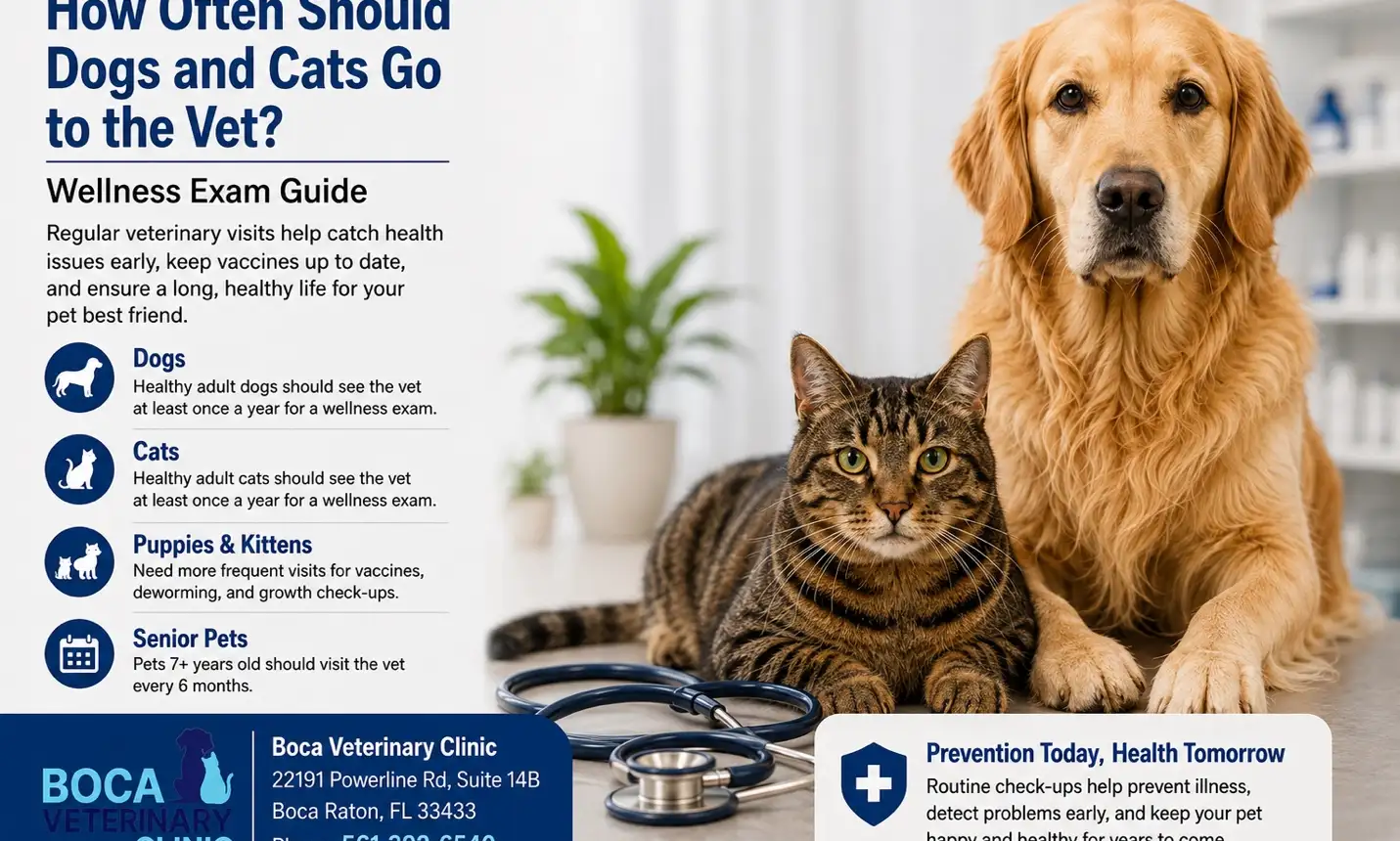
As dogs get older, changes in energy, mobility and behavior can occur gradually. But pet owners shouldn’t assume every change is simply a normal part of aging.
Senior dogs should see a veterinarian when they develop unexplained weight loss, significant appetite changes, increased thirst or urination, difficulty walking, persistent coughing, repeated vomiting or diarrhea, new lumps, behavioral changes, dental problems or unusual weakness. These changes can sometimes be early signs of treatable medical conditions.
Regular veterinary examinations become increasingly important as your dog ages because some diseases can develop before obvious symptoms appear.
Boca Veterinary Clinic provides senior dog wellness care, internal medicine and advanced diagnostics in Boca Raton for older dogs throughout South Florida.
Boca Veterinary Clinic
22191 Powerline Rd, Suites 14A–B
Boca Raton, FL 33433
Phone: 561-392-6540
Key Takeaways
- Don’t automatically assume new symptoms are simply caused by old age.
- Unexplained weight loss in a senior dog warrants veterinary attention.
- Significant changes in appetite can indicate an underlying medical problem.
- Increased thirst and urination are important symptoms to report.
- Difficulty getting up or walking can indicate pain or mobility problems.
- Persistent coughing or breathing changes should be evaluated.
- Repeated vomiting or diarrhea shouldn’t be dismissed in an older dog.
- New or changing lumps should be examined by a veterinarian.
- Behavioral changes can sometimes be associated with pain or medical problems.
- Dental disease can cause significant discomfort even when a dog continues eating.
- Many senior dogs benefit from veterinary examinations approximately every six months, depending on their individual health.
When Is a Dog Considered a Senior?
There isn’t one exact age when every dog becomes a senior.
Aging varies considerably according to size, breed, genetics and overall health.
Large and giant-breed dogs generally reach their senior years earlier than many smaller breeds.
Rather than focusing only on chronological age, your veterinarian can evaluate your dog’s:
- Breed
- Size
- Weight
- Medical history
- Mobility
- Body condition
- Lifestyle
- Existing health conditions
to determine when senior-focused preventive care is appropriate.
What Are Common Warning Signs in Senior Dogs?
Aging itself isn’t a disease.
While older dogs naturally change over time, new symptoms can sometimes indicate medical problems that deserve investigation.
Here are 10 senior dog health warning signs you shouldn’t ignore.
- Unexplained Weight Loss
Unintentional weight loss in a senior dog should be discussed with a veterinarian.
Weight loss can occur for many reasons, including changes involving:
- Dental health
- Digestion
- Nutrition
- Kidney function
- Liver function
- Endocrine health
- Chronic disease
- Other underlying conditions
Because gradual weight loss can be difficult to notice at home, regular veterinary visits provide an objective record of your dog’s weight.
What If My Senior Dog Is Eating but Losing Weight?
A dog can lose weight despite maintaining or even increasing their appetite.
This can occur with several different medical conditions.
If your senior dog is eating normally but continuing to lose weight, schedule a veterinary examination.
Bloodwork, urinalysis or other diagnostic testing may be recommended.
- Changes in Appetite

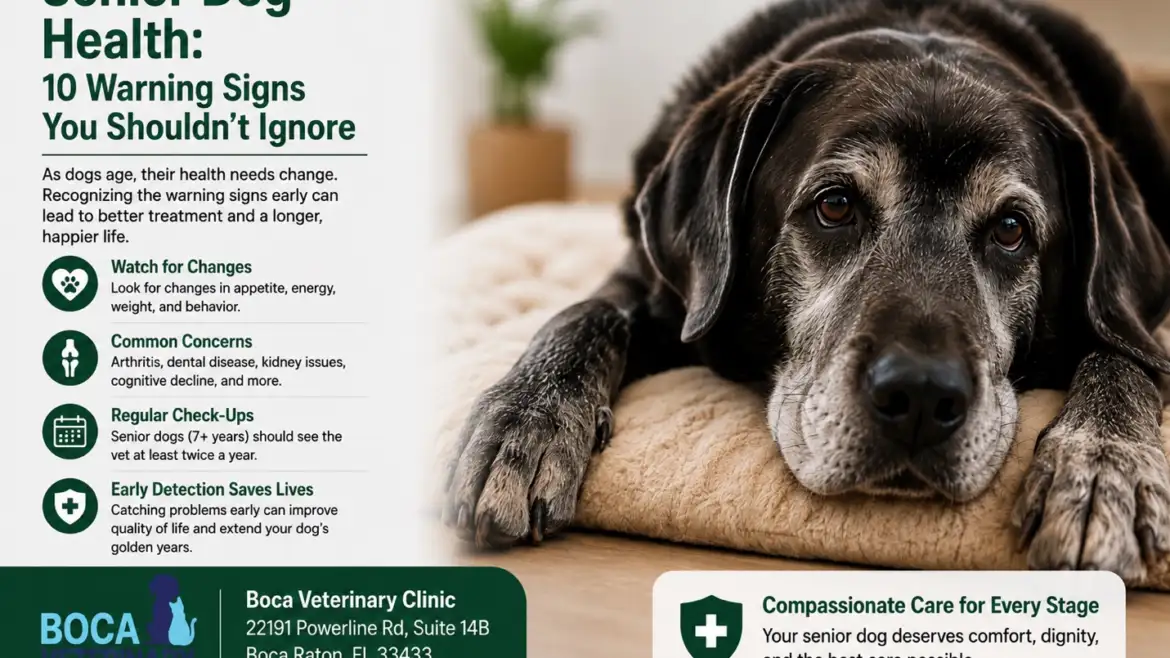
Senior Dog Health: 10 Warning Signs You Shouldn’t Ignore
A significant or persistent change in a senior dog’s appetite warrants veterinary attention.
This includes both eating less and, in some situations, eating significantly more than usual.
Loss of appetite can be associated with:
- Dental pain
- Nausea
- Gastrointestinal problems
- Pain
- Medication effects
- Organ disease
- Other illnesses
Pay attention to whether your dog:
- Refuses meals
- Eats only treats
- Drops food
- Has difficulty chewing
- Suddenly becomes extremely hungry
- Loses weight despite eating
These details can help your veterinarian determine the next step.
When Should I Worry About My Senior Dog Not Eating?
Contact your veterinarian when appetite loss persists or is accompanied by:
- Vomiting
- Diarrhea
- Weakness
- Lethargy
- Weight loss
- Abdominal pain
- Changes in drinking
- Behavioral changes
A senior dog with significant additional symptoms may require more urgent evaluation.
- Drinking or Urinating More Than Normal
A noticeable increase in thirst or urination is an important change in a senior dog and should be reported to your veterinarian.
Potential causes can include conditions involving:
- Kidneys
- Endocrine system
- Metabolism
- Medications
- Other medical problems
Watch for:
- Emptying the water bowl more frequently
- Seeking additional water sources
- Asking to go outside more often
- Producing larger amounts of urine
- New accidents inside the house
Don’t intentionally restrict your dog’s water intake unless a veterinarian specifically instructs you to do so.
Why Is My Senior Dog Drinking So Much Water?
There are many possible explanations, and increased thirst can’t be diagnosed based on the symptom alone.
Your veterinarian may recommend:
- Physical examination
- Blood testing
- Urinalysis
- Other diagnostic tests
The combination can help identify why your dog’s drinking habits have changed.
- Difficulty Walking, Standing or Climbing Stairs
Slowing down somewhat can occur with age, but difficulty moving shouldn’t automatically be dismissed as normal aging.
Signs of mobility problems include:
- Difficulty standing after resting
- Stiffness
- Limping
- Reluctance to climb stairs
- Difficulty jumping
- Reduced interest in walks
- Slipping on smooth floors
- Changes in posture
- Difficulty getting into the car
Possible causes include joint disease, orthopedic problems, neurological conditions and pain.
Your veterinarian can evaluate the cause and discuss appropriate management.
Why Is My Senior Dog’s Back Leg Getting Weak?
Hind-leg weakness can have orthopedic, neurological and other causes.
A gradual change warrants veterinary evaluation.
Sudden inability to stand, walk or use one or more limbs may require urgent or emergency veterinary care.
- Persistent Coughing or Breathing Changes
New or persistent coughing in a senior dog should be evaluated by a veterinarian.
Coughing can have many possible causes involving the respiratory system, airways or heart.
Your veterinarian may recommend diagnostic testing such as:
- Physical examination
- Digital chest X-rays
- Blood testing
- Echocardiography
- Other tests
The appropriate workup depends on your dog’s symptoms and examination findings.
Is Heavy Breathing Normal in an Older Dog?
Persistent or unexplained changes in breathing aren’t something to dismiss because of age.
Seek veterinary attention if your dog develops unusual:
- Panting
- Rapid breathing
- Labored breathing
- Coughing
- Exercise intolerance
Severe difficulty breathing is an emergency and requires immediate veterinary attention.
- Repeated Vomiting or Diarrhea
An isolated digestive upset can occur at any age.
However, repeated or persistent vomiting or diarrhea in a senior dog warrants veterinary attention.
Possible causes range from gastrointestinal problems to conditions involving other organs.
Seek veterinary care sooner if vomiting or diarrhea occurs with:
- Blood
- Loss of appetite
- Weight loss
- Weakness
- Abdominal pain
- Dehydration
- Inability to keep water down
- Behavioral changes
Diagnostic testing may be needed when gastrointestinal symptoms continue or recur.
- New Lumps or Changes in Existing Lumps
It’s common for older dogs to develop lumps and bumps, but you cannot reliably determine whether a lump is harmless simply by looking at or touching it.
Have new masses examined by your veterinarian.
Also report changes in an existing lump, including:
- Rapid growth
- Change in shape
- Change in texture
- Bleeding
- Ulceration
- Discharge
- Pain
- Changes in color
Your veterinarian may recommend obtaining a cell or tissue sample.
Are All Lumps on Senior Dogs Cancer?
No.
Dogs can develop many types of masses, including benign and malignant growths.
Appearance alone often isn’t enough to determine what a mass is.
Veterinary examination and, when appropriate, diagnostic sampling provide much more useful information.
- Behavioral or Personality Changes
Changes in behavior can sometimes be an early sign of pain, illness or age-related cognitive changes.
Watch for:
- New anxiety
- Restlessness
- Confusion
- Increased irritability
- Changes in sleep
- Staring
- Getting stuck in corners
- New house-soiling
- Reduced interaction with family
- Changes in learned behaviors
Don’t assume a senior dog’s behavioral change is purely psychological.
Medical problems should be considered first.
Why Is My Senior Dog Restless at Night?
Nighttime restlessness can have several potential causes, including discomfort, changes in sleep patterns, anxiety or cognitive changes.
A veterinary examination can help identify whether an underlying medical problem is contributing.
- Bad Breath or Difficulty Eating
Dental disease is common in older dogs.
Signs include:
- Persistent bad breath
- Heavy tartar
- Red gums
- Bleeding gums
- Loose teeth
- Broken teeth
- Dropping food
- Chewing on one side
- Pawing at the mouth
- Facial swelling
Dogs can continue eating even when their mouths hurt.
Regular oral examinations are therefore important even when your senior dog appears to eat normally.
Professional dental treatment may be recommended when significant disease is present.
- Weakness, Collapse or Major Changes in Energy
Senior dogs may sleep more than they did as young adults, but a major or sudden change in energy deserves attention.
Contact your veterinarian if your dog becomes unusually:
- Weak
- Lethargic
- Reluctant to move
- Exercise intolerant
- Unsteady
Sudden collapse or inability to stand can indicate a serious medical problem and requires prompt veterinary attention.
What Changes Are Normal in an Aging Dog?
Some gradual changes may accompany aging.
For example, older dogs may:
- Sleep more
- Have less stamina
- Move more slowly
- Develop gray hair
- Require adjustments to exercise
However, the key word is gradual.
Significant or sudden changes shouldn’t automatically be attributed to aging.
When something changes from your dog’s normal routine, tell your veterinarian.
How Often Should a Senior Dog See the Vet?
Many senior dogs benefit from veterinary examinations approximately every six months, although the appropriate schedule depends on the individual dog.
More frequent examinations provide opportunities to monitor:
- Weight
- Body condition
- Mobility
- Dental health
- Heart and lungs
- Skin and masses
- Appetite
- Behavior
- Laboratory results
- Existing medical conditions
Dogs with chronic diseases may require even more frequent monitoring.
What Blood Tests Should Senior Dogs Have?
There isn’t one universal testing panel appropriate for every senior dog.
Your veterinarian may recommend testing based on age, health history and examination findings.
Testing may include:
- Complete blood count
- Blood chemistry
- Blood glucose
- Electrolytes
- Urinalysis
- Other targeted tests
Bloodwork can provide information that isn’t available through a physical examination alone.
Does a Healthy Senior Dog Need Bloodwork?
Your veterinarian may recommend screening bloodwork even when a senior dog appears healthy.
This can help establish baseline information and may identify changes that aren’t yet producing obvious symptoms.
Whether testing is appropriate and how frequently it should be performed depends on your individual dog.
Why Is Urinalysis Important for Senior Dogs?
Urinalysis can provide information about urinary and overall health.
It may help evaluate:
- Urine concentration
- Protein
- Glucose
- Blood
- Crystals
- Signs of inflammation
- Other abnormalities
Bloodwork and urinalysis often provide complementary information.
When Does a Senior Dog Need an Ultrasound?
Your veterinarian may recommend abdominal ultrasound if symptoms, bloodwork or other diagnostic tests suggest an internal abnormality.
Potential reasons include:
- Unexplained weight loss
- Persistent vomiting
- Abdominal pain
- Appetite loss
- Abnormal laboratory results
- Urinary problems
- Suspected organ disease
- An abdominal mass
Ultrasound allows veterinarians to evaluate many abdominal organs and soft tissues in detail.
When Does a Senior Dog Need an Echocardiogram?
An echocardiogram may be recommended when a veterinarian detects or suspects a cardiac abnormality.
Possible reasons include:
- Heart murmur
- Suspected heart disease
- Certain abnormal heart rhythms
- Changes seen on chest X-rays
- Exercise intolerance
- Other cardiac concerns
An echocardiogram uses ultrasound to provide real-time images of the heart’s structures and function.
How Can I Help My Senior Dog Stay Healthy?
Senior wellness care should be individualized, but several basic principles apply to most older dogs.
Maintain a Healthy Weight
Excess weight can place additional stress on joints and overall health.
Unexpected weight loss should also be investigated.
Keep Your Dog Moving
Appropriate regular activity can help support mobility and muscle condition.
Your veterinarian can recommend exercise appropriate for your dog’s health.
Pay Attention to Dental Health
Continue brushing and other veterinarian-recommended home dental care.
Schedule professional dental treatment when medically appropriate.
Watch for Small Changes
Changes in drinking, urination, appetite, weight and behavior may be important.
Keep Regular Veterinary Appointments
Preventive examinations become increasingly valuable as dogs age.
What Should I Monitor at Home?
One of the best things you can do for an older dog is learn their normal patterns.
Pay attention to:
- Weight
- Appetite
- Water consumption
- Urination
- Stool
- Vomiting
- Mobility
- Breathing
- Coughing
- Sleep
- Behavior
- Lumps
- Dental health
You should not diagnose the problem yourself, your Boca Veterinary Clinic veterinarian will do that for you.
Recognizing that something has changed and telling your veterinarian can be extremely valuable.
When Is a Senior Dog’s Condition an Emergency?
Seek immediate veterinary care for serious symptoms such as:
- Difficulty breathing
- Collapse
- Unresponsiveness
- Severe weakness
- Uncontrolled bleeding
- Repeated or prolonged seizures
- Major trauma
- Suspected poisoning
- Inability to urinate
- Severe abdominal swelling
- Sudden inability to walk
If you’re uncertain how urgent your dog’s symptoms are, call a veterinarian.
Senior Dog Veterinary Care in Boca Raton
Boca Veterinary Clinic provides comprehensive senior dog care in Boca Raton, combining preventive medicine with advanced diagnostic capabilities when older pets develop new or unexplained symptoms.
Services available include:
- Senior wellness examinations
- In-house laboratory testing
- Digital X-rays
- Abdominal ultrasound
- Echocardiograms
- Internal medicine
- Veterinary dentistry
- Endoscopy
- Surgery
- Urgent and emergency veterinary care during operating hours
Having these capabilities available through a full-service animal hospital can help streamline the evaluation of complex medical problems in senior dogs.
Boca Veterinary Clinic is open seven days a week and serves pet owners throughout Boca Raton, Parkland, Coconut Creek, Deerfield Beach and Delray Beach.
Boca Veterinary Clinic
22191 Powerline Rd, Suites 14A–B
Boca Raton, FL 33433
Call 561-392-6540 to schedule a senior wellness examination or discuss changes you’ve noticed in your older dog.
Frequently Asked Questions About Senior Dog Health
What are the most common warning signs in a senior dog?
Important changes include unexplained weight loss, appetite changes, increased thirst or urination, difficulty walking, persistent coughing, repeated vomiting or diarrhea, new lumps, behavioral changes, dental problems and unusual weakness.
How often should a senior dog go to the vet?
Many senior dogs benefit from a veterinary examination approximately every six months. Dogs with chronic health problems may need more frequent monitoring.
Why is my senior dog losing weight but still eating?
Weight loss despite a normal or increased appetite can occur with several medical conditions. A veterinary examination and diagnostic testing can help determine the cause.
Why is my old dog drinking so much water?
Increased thirst can be associated with kidney, endocrine, metabolic and other medical conditions. Significant changes in drinking or urination should be discussed with your veterinarian.
Why is my senior dog having trouble walking?
Mobility problems can be associated with joint disease, orthopedic conditions, neurological problems or pain. A veterinary examination can help identify the cause.
Why is my senior dog restless at night?
Nighttime restlessness can have multiple causes, including discomfort, anxiety, sleep changes and cognitive changes. New or persistent behavioral changes warrant veterinary evaluation.
Are lumps normal on older dogs?
Lumps become more common as dogs age, but you can’t reliably determine whether a mass is harmless based on appearance or touch alone. New or changing lumps should be evaluated.
Why is my senior dog not eating?
Dental pain, nausea, gastrointestinal problems, medication effects, pain and systemic illness can all reduce appetite. Persistent appetite loss or appetite loss with other symptoms warrants veterinary attention.
Does a senior dog need bloodwork if they seem healthy?
Your veterinarian may recommend screening laboratory tests for an apparently healthy senior dog because some medical changes can occur before obvious symptoms develop.
When should a senior dog get an ultrasound?
Ultrasound may be recommended for unexplained weight loss, vomiting, abdominal pain, abnormal bloodwork, urinary problems, suspected organ disease or other findings requiring further investigation.
Is sudden weakness in a senior dog an emergency?
Sudden severe weakness, collapse, inability to stand or other significant changes can indicate a serious medical problem and require prompt veterinary attention.
Where can I take my senior dog for veterinary care in Boca Raton?
Boca Veterinary Clinic provides senior wellness care and advanced diagnostics at 22191 Powerline Rd, Suites 14A–B, Boca Raton, FL 33433. Call 561-392-6540 to schedule an appointment.