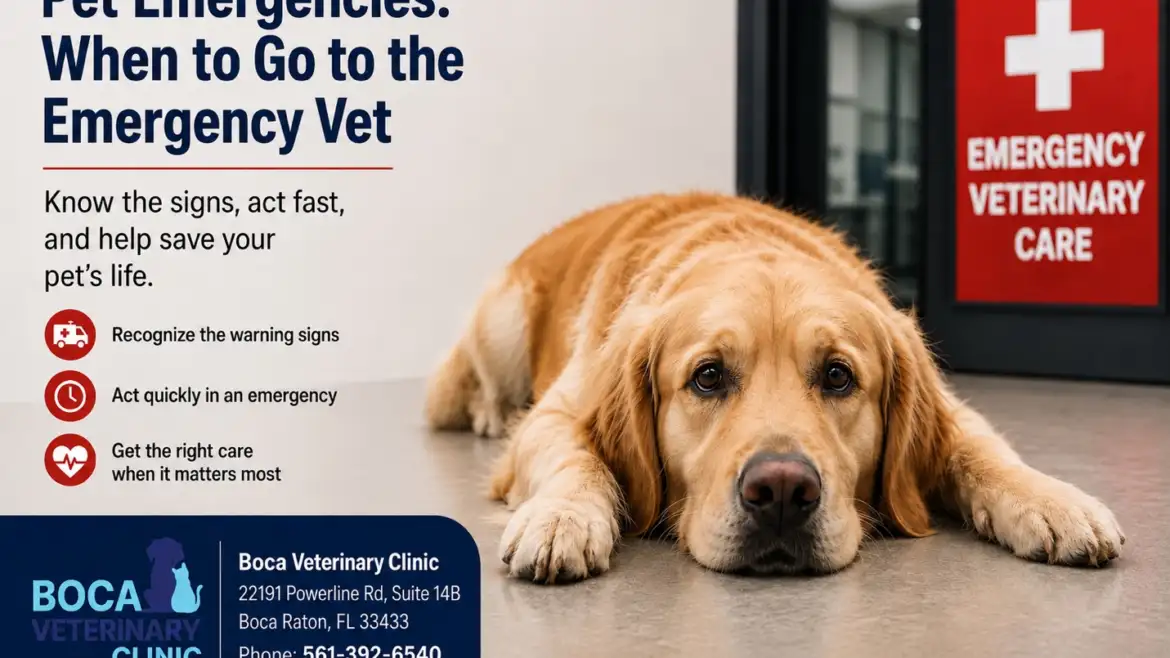
When your dog or cat suddenly starts acting sick, it can be difficult to know whether you should monitor the problem, call your veterinarian or seek veterinary care immediately.
A pet emergency is generally a sudden or serious medical problem that requires prompt veterinary attention. Difficulty breathing, uncontrolled bleeding, seizures, collapse, suspected poisoning, inability to urinate and significant trauma are examples of problems that can require immediate veterinary care.
If you’re unsure whether your pet’s symptoms are an emergency, it’s safer to call a veterinarian and describe what’s happening rather than trying to diagnose the problem yourself.
Boca Veterinary Clinic provides emergency and urgent veterinary care for dogs and cats during operating hours at our Boca Raton animal hospital.
Boca Veterinary Clinic
22191 Powerline Rd, Suites 14A–B
Boca Raton, FL 33433
Call: 561-392-6540
Key Takeaways
- Difficulty breathing should be treated as an emergency.
- Collapse, unconsciousness or severe weakness requires prompt veterinary attention.
- Repeated or prolonged seizures can be life-threatening.
- Uncontrolled bleeding or significant trauma needs immediate evaluation.
- Suspected poisoning should never be handled with a wait-and-see approach.
- Straining to urinate without producing urine can indicate a dangerous urinary obstruction.
- A swollen or painful abdomen can be a sign of a serious medical emergency.
- Severe vomiting or diarrhea can lead to dehydration and may indicate a more serious underlying problem.
- Heatstroke requires immediate veterinary care.
- Eye injuries should be evaluated promptly.
- Sudden inability to stand or walk can indicate a serious injury or neurological problem.
- When you’re uncertain, call your veterinarian and describe your pet’s symptoms.
12 Signs Your Pet May Need Emergency Veterinary Care
- Difficulty Breathing
Difficulty breathing is a veterinary emergency.
Signs can include:
- Labored or unusually rapid breathing
- Gasping
- Choking
- Persistent coughing or gagging
- Open-mouth breathing in a cat
- Blue or gray gums
- Unusual breathing noises
- Obvious effort when trying to breathe
Breathing problems can be caused by many conditions, including airway obstruction, heart disease, lung disease, trauma and allergic reactions.
A pet that isn’t getting enough oxygen can deteriorate rapidly.
Do not wait to see whether serious breathing difficulty improves on its own. Seek veterinary care immediately.
- Collapse, Unconsciousness or Extreme Weakness
A dog or cat that suddenly collapses, becomes unresponsive or cannot stand normally should receive prompt veterinary evaluation.
Possible causes can range from cardiovascular and neurological problems to internal bleeding, toxin exposure and other serious medical conditions.
Even if your pet appears to recover shortly afterward, you should contact a veterinarian.
The underlying cause of the episode may still require diagnosis and treatment.
- Seizures
Seeing your pet have a seizure can be frightening.
A seizure may cause:
- Loss of consciousness
- Muscle rigidity
- Paddling movements
- Trembling
- Drooling
- Loss of bladder or bowel control
- Disorientation afterward
A first-time seizure warrants veterinary attention.
Repeated seizures, prolonged seizure activity or a pet that doesn’t recover normally between seizures requires urgent veterinary care.
Keep your pet away from stairs, furniture edges and other hazards during a seizure.
Do not put your hands or objects inside your pet’s mouth.
- Severe or Uncontrolled Bleeding
Minor cuts aren’t always emergencies, but heavy bleeding or bleeding that doesn’t stop requires prompt veterinary attention.
If possible, place a clean cloth or gauze over an external wound and apply gentle, steady pressure while arranging veterinary care.
Don’t repeatedly lift the cloth to check the wound because doing so can interfere with clot formation.
Blood coming from the mouth, nose, urine, stool or vomit can also indicate a potentially serious medical problem and should be discussed with a veterinarian promptly.
- Suspected Poisoning or Toxin Exposure
Don’t wait for symptoms to appear if you know or suspect your pet has ingested something toxic.
Potential hazards can include:
- Human medications
- Chocolate
- Xylitol-containing products
- Certain plants
- Antifreeze
- Rodenticides
- Household chemicals
- Some foods
- Lawn and garden products
The appropriate treatment depends heavily on what your pet encountered, how much was involved, your pet’s size and how long ago the exposure occurred.
Do not induce vomiting or give home remedies unless a veterinarian or animal poison professional specifically instructs you to do so.
Save the packaging, label or a photo of the suspected substance whenever possible and call a veterinarian immediately.
- Significant Trauma
A dog or cat should be evaluated after significant trauma such as:
- Being hit by a vehicle
- A serious fall
- An animal attack
- A crushing injury
- A deep bite wound
- Suspected broken bones
- Significant blunt-force trauma
An injured pet may appear relatively normal immediately after an accident despite having internal injuries.
Internal bleeding and other complications aren’t always visible from the outside.
Move an injured animal carefully. Pain and fear can also cause an otherwise gentle pet to bite or scratch.
- Straining or Being Unable to Urinate
Repeatedly attempting to urinate while producing little or no urine can be an emergency.
This is particularly concerning in male cats because urinary obstruction can become life-threatening.
Warning signs include:
- Repeated trips to the litter box
- Straining without producing urine
- Crying while attempting to urinate
- Licking the genital area excessively
- Blood in the urine
- Restlessness
- Vomiting or weakness along with urinary difficulty
Don’t assume your cat is simply constipated.
If your pet is repeatedly straining and you’re uncertain whether urine is being produced, contact a veterinarian promptly.
- A Swollen, Hard or Painful Abdomen
Sudden abdominal enlargement accompanied by discomfort, restlessness, unsuccessful attempts to vomit, weakness or collapse can indicate a serious medical problem.
One potential cause in dogs is gastric dilatation-volvulus (GDV), commonly called bloat, in which the stomach expands and may twist.
Other serious abdominal conditions can produce similar symptoms.
A suddenly enlarged or painful abdomen should be evaluated immediately rather than monitored at home.
- Severe or Persistent Vomiting or Diarrhea
A single episode of vomiting or diarrhea doesn’t automatically mean your pet has a life-threatening emergency.
However, the situation becomes more concerning when vomiting or diarrhea is:
- Severe or repeated
- Bloody
- Accompanied by weakness or collapse
- Associated with abdominal pain
- Occurring after suspected toxin exposure
- Accompanied by inability to keep water down
- Occurring in a very young, elderly or medically fragile pet
Vomiting can have many causes, ranging from relatively minor stomach upset to intestinal obstruction, toxin exposure or serious systemic illness.
When in doubt, call Boca Veterinary Clinic and describe the frequency, duration and appearance of the vomiting or diarrhea as well as your pet’s overall behavior.
- Heatstroke or Severe Overheating
Heat-related illness is particularly important for South Florida pet owners.
Dogs can overheat quickly in hot, humid conditions.
Warning signs of heatstroke can include:
- Excessive panting
- Heavy drooling
- Weakness
- Confusion
- Vomiting
- Collapse
- Abnormal gum color
- Loss of coordination
- Seizures
Heatstroke can damage internal organs and become life-threatening.
Move your pet out of the hot environment and seek veterinary care immediately if you suspect heatstroke.
Never leave a pet unattended in a parked vehicle, even for a short period.
- Eye Injuries
Eye problems can worsen quickly and may threaten your pet’s vision.
Seek prompt veterinary care for:
- Trauma to the eye
- An object lodged in or around the eye
- Significant swelling
- Bleeding
- Sudden cloudiness
- An eye that appears displaced
- Severe squinting or obvious eye pain
- Sudden vision problems
Avoid attempting to remove embedded objects yourself.
Prompt treatment can sometimes make a significant difference in preserving eye function.
- Sudden Inability to Walk or Stand
Sudden paralysis, severe weakness or inability to use one or more legs warrants immediate veterinary attention.
Possible causes include:
- Trauma
- Spinal injuries
- Neurological conditions
- Severe orthopedic injuries
- Circulatory problems
- Toxin exposure
- Other serious medical conditions
Keep your pet’s movement to a minimum if you suspect a spinal or orthopedic injury.
Transport your pet carefully and contact Boca Veterinary Clinic.
What Should I Do During a Pet Emergency?
Call a veterinarian as soon as possible and briefly explain what happened and what symptoms you’re seeing.
Calling ahead allows the veterinary team to provide instructions and prepare for your arrival when appropriate.
While transporting your pet:
- Remain as calm as possible.
- Handle an injured pet carefully.
- Keep cats secured in a carrier when possible.
- Minimize movement if you suspect a spinal injury or fracture.
- Bring medications or relevant medical information if readily available.
- Bring the packaging or label if poisoning is suspected.
- Follow any instructions the veterinary team provides over the phone.
Remember that an animal experiencing pain or fear may bite or scratch even if normally gentle.
Should I Call the Vet or Just Go In?
If your pet is having obvious difficulty breathing, has collapsed, is experiencing severe bleeding, has suffered major trauma or has another clearly life-threatening problem, seek veterinary attention immediately.
For symptoms where the urgency isn’t clear, calling the clinic can help.
Describe:
- What happened
- When symptoms started
- Your pet’s age and approximate weight
- Existing medical conditions
- Current medications
- What your pet is doing right now
- Any suspected toxin or foreign-object exposure
A veterinary professional can help determine the appropriate next step.
What Happens When My Pet Arrives for Emergency Care?
Emergency veterinary care generally begins with triage.
The veterinary team rapidly evaluates your pet to identify the most urgent threats to life, particularly problems involving the airway, breathing and circulation.
A critically ill pet may need stabilization before extensive diagnostic testing begins.
Depending on your pet’s condition, emergency evaluation and treatment may involve:
- Oxygen therapy
- IV fluids
- Pain management
- Blood testing
- Digital X-rays
- Ultrasound
- Medications
- Wound treatment
- Surgery
- Hospitalization
The exact approach depends on your pet’s symptoms and condition.
Pet Emergencies in Boca Raton & South Florida
South Florida’s environment creates several risks pet owners should keep in mind.
Heat & Humidity
Boca Raton’s warm climate means heat-related illness can be a concern throughout much of the year.
Avoid strenuous outdoor activity during extreme heat, provide access to fresh water and shade, and never leave your pet unattended inside a vehicle.
Toxic Plants & Household Products
Keep medications, chemicals, pesticides, toxic foods and potentially dangerous plants where pets cannot reach them.
Wildlife
South Florida pets can encounter wildlife that may bite, sting or expose them to toxins.
Supervise pets outdoors and contact a veterinarian promptly following a potentially dangerous wildlife encounter.
Hurricanes & Severe Weather
Keep your pet included in your family’s hurricane plan.
An emergency kit should contain important supplies such as food, water, medications, identification and relevant veterinary information.
Emergency Veterinary Care in Boca Raton
Boca Veterinary Clinic provides emergency and urgent veterinary care during operating hours for dogs and cats in Boca Raton and surrounding communities.
Our full-service animal hospital has access to diagnostic and treatment capabilities including:
- Digital radiology
- In-house laboratory testing
- Ultrasound
- Echocardiograms
- Veterinary surgery
- Internal medicine
- Hospitalization
- Other advanced diagnostics and treatments
Boca Veterinary Clinic also serves pet owners from Parkland, Coconut Creek, Deerfield Beach and Delray Beach.
Boca Veterinary Clinic
22191 Powerline Rd, Suites 14A–B
Boca Raton, FL 33433
If your pet is experiencing an emergency during our operating hours, call 561-392-6540.
Frequently Asked Questions About Pet Emergencies
How do I know if my dog or cat is having an emergency?
Difficulty breathing, collapse, severe bleeding, repeated or prolonged seizures, significant trauma, suspected poisoning, inability to urinate, severe pain and sudden inability to walk are examples of signs that require prompt veterinary attention. When you’re uncertain about the seriousness of your pet’s symptoms, call a veterinarian.
Is difficulty breathing always an emergency for a pet?
Difficulty breathing should be treated as an emergency. Labored breathing, gasping, blue or gray gums, choking or open-mouth breathing in a cat can indicate inadequate oxygen and require immediate veterinary attention.
Should I take my dog to the emergency vet for vomiting?
One isolated episode isn’t necessarily an emergency in an otherwise normal dog. Repeated or severe vomiting, blood, abdominal pain, weakness, suspected poisoning, inability to keep water down or vomiting accompanied by other concerning symptoms warrants prompt veterinary evaluation.
Is a cat straining to urinate an emergency?
It can be. A cat repeatedly straining while producing little or no urine may have a urinary obstruction. This is particularly dangerous in male cats and requires immediate veterinary attention.
Is a swollen stomach in a dog an emergency?
A suddenly swollen or painful abdomen can indicate a serious condition. If your dog also appears restless, weak, tries unsuccessfully to vomit or collapses, seek emergency veterinary care immediately.
Should I make my pet vomit after eating something poisonous?
Do not induce vomiting unless a veterinarian or animal poison professional specifically tells you to do so. Vomiting can make some toxin exposures more dangerous. Call for professional guidance immediately.
Should my pet see a veterinarian after being hit by a car even if they seem okay?
Yes. Significant trauma can cause internal injuries that aren’t immediately visible. A pet involved in a serious accident should be evaluated by a veterinarian even if obvious external injuries are absent.
Where can I find an emergency vet in Boca Raton?
Boca Veterinary Clinic provides emergency and urgent veterinary care for dogs and cats during operating hours at 22191 Powerline Rd, Suites 14A–B, Boca Raton, FL 33433. Call 561-392-6540 if your pet is experiencing an emergency during operating hours.
Emergency preparation resource: AVMA pet first aid and emergency transport guide. First aid does not replace veterinary care.